Trade-based money laundering
What is trade-based money laundering?
Trade-based money laundering (TBML) moves value across borders through trade paperwork instead of bank transfers. By over- or under-invoicing goods, billing the same shipment more than once, or invoicing shipments that never existed, criminals make dirty money look like payment for legitimate commerce. Because global trade is enormous and document-driven, a mispriced invoice rarely gets checked against the real market value of the goods.
What is trade-based money laundering?
Most laundering techniques move money and try to make it look clean. Trade-based money laundering moves value (hidden inside shipments of cars, clothing, gold, or electronics) and lets the trade paperwork do the cleaning.
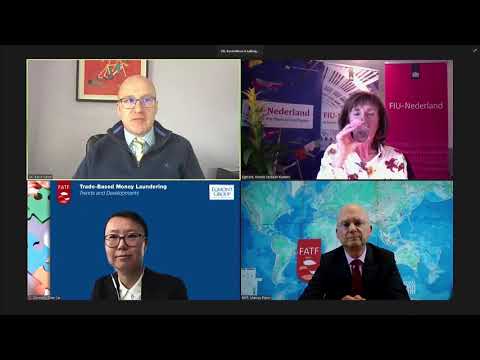
The core trick is a gap between what a shipment is really worth and what its documents say it is worth. Over-invoice a container of cheap goods and the buyer’s “payment” quietly transfers extra value to the seller. Under-invoice it and the value travels the other way. Invoice the same shipment twice through different banks, or invoice a shipment that never existed at all, and money moves with no goods behind it whatsoever. FATF’s typology reports (the first in 2006, updated with the Egmont Group in December 2020) catalogue all of these as the standard TBML playbook.
What makes the technique powerful is its camouflage. World goods trade is measured in the tens of trillions of dollars, spread across hundreds of millions of shipments, letters of credit, and invoices a year. Banks financing that trade check that documents match each other (invoice, bill of lading, packing list), not that the price matches reality. A wire that would look odd between two individuals looks unremarkable between an importer and an exporter with a matching invoice.
How does trade-based money laundering work?
- The criminal group controls, or buys the cooperation of, businesses on both sides of a border: an importer where the dirty money sits and an exporter where clean money is wanted (or the reverse).
- A real or fictional trade is set up between them. The goods are typically hard to price from the outside: used cars, textiles, scrap metal, electronics, gold.
- The invoice sets the transfer amount. In an over-invoicing scheme, goods worth $100,000 are billed at $1,000,000; the importer settles the invoice with criminal funds.
- The payment crosses the border as ordinary trade settlement (a bank wire backed by documents, or a letter of credit), attracting none of the scrutiny an unexplained transfer would.
- The excess value arrives as legitimate-looking export revenue, ready for integration; repeated shipments move as much as the trade relationship can plausibly carry.
Why trade-based laundering works
Trade finance is document-driven by design. Under the rules that govern letters of credit, banks deal in documents, not goods: if the paperwork is internally consistent, the bank pays. No teller ever sees the container, and no compliance analyst is expected to know the fair market price of second-hand garments in bulk. The system was built to make global commerce fast, and TBML rides exactly that speed.
Responsibility is also split across agencies that historically did not talk to each other. Customs sees the goods but not the payments; banks see the payments but not the goods; the two halves of the lie sit in different databases in different countries. A price that is absurd when both sides are compared looks fine from either side alone.
Finally, TBML solves the launderer’s border problem elegantly. Bulk cash has to be smuggled; wires leave a trail that ends at a shell company at best. A shipment of goods, though, is supposed to cross the border, and its payment is supposed to follow. The crime hides inside the one channel where large cross-border value transfer is normal.
The Lebanese Canadian Bank: used cars, cocaine, and a bank as the hub
On February 10, 2011, FinCEN designated Lebanese Canadian Bank SAL (a Beirut bank with correspondent access to the US financial system) a financial institution of “primary money laundering concern” under Section 311 of the USA PATRIOT Act. It was a rarely used and severe measure: US banks were put on notice to cut the bank off from dollar clearing.
The scheme behind the designation was trade-based at its core. US investigators, led by the DEA, had traced a network around Lebanese-Colombian trafficker Ayman Joumaa that wired more than $300 million into the United States to buy used cars. The cars were shipped to West Africa and sold. The sale proceeds, mingled with cash from cocaine trafficking in Africa and elsewhere, then flowed back to Lebanon through money-exchange houses and accounts that US authorities said were controlled by or linked to Hezbollah, with Lebanese Canadian Bank as a key node. Every leg looked like commerce: car purchases, vehicle exports, trade settlements. The value of the drug proceeds crossed oceans inside the used-car trade.
The designation effectively killed the bank. Its assets were sold to Société Générale de Banque au Liban, and in December 2011 US prosecutors in Manhattan filed a civil forfeiture complaint seeking about $480 million. In June 2013, the case settled: $102 million paid from the bank’s assets to resolve the forfeiture and money laundering claims, one of the clearest public records of a bank serving as infrastructure for trade-based laundering.
The garment trade has served the same purpose closer to home. In September 2014, about a thousand federal and local officers raided businesses across the Los Angeles Fashion District that had been folding cartel drug cash into clothing exports to Mexico, a trade-based system in the Black Market Peso Exchange pattern. Roughly $65 million was seized on the raid day, a figure that rose to about $90–100 million in the weeks that followed as seized accounts were counted.
How trade-based laundering gets caught
The decisive move is putting the two halves of the lie side by side. US Homeland Security Investigations has operated a Trade Transparency Unit since 2004, sharing import–export data with partner countries so that analysts can compare what a shipment was declared to be worth leaving one country against what it was declared to be worth arriving in the other. Mismatched declarations, impossible unit prices, and trade flows that exist only on paper surface in exactly that comparison.
Banks contribute from the payments side. Price-anomaly screening flags invoices far from market ranges; monitoring flags exporters paid by unrelated third parties and letters of credit amended over and over. FinCEN’s May 2014 funnel-account advisory told US banks to connect a specific pattern to TBML: cash deposited into a business account across many states, withdrawn rapidly somewhere else, and tied to cross-border trade.
And because TBML needs businesses, it inherits business vulnerabilities: employees, records, and physical goods. The Lebanese Canadian Bank case began with drug investigators following cars, not wires; the LA raids grew from undercover work and a kidnapping-ransom investigation that led straight into garment firms’ books, detailed on the BMPE page. Paper can lie about prices, but warehouses, shipping manifests, and cooperating witnesses eventually tell investigators what the goods were really worth.
Frequently asked questions
How big is trade-based money laundering?
Nobody reliably knows, which is part of the appeal. The FATF–Egmont Group 2020 report describes TBML as hard to detect and quantify precisely because it hides inside legitimate commerce, and global goods trade runs to tens of trillions of dollars a year. Estimates exist, but none is authoritative.
What is the difference between over- and under-invoicing?
Direction. Over-invoicing moves value to the exporter: the importer overpays for cheap goods, and the excess lands abroad as clean revenue. Under-invoicing moves value to the importer: goods arrive worth far more than was paid, and selling them locally converts the hidden value into legitimate sales income.
Why doesn't customs catch mispriced invoices?
Customs officers screen for smuggling, safety, and duty evasion; a shipment whose paperwork is internally consistent and whose duties are paid raises no alarm. Checking whether $1 million is a fair price for a container of used clothing requires market data and cross-border comparison that inspection lanes were never built to do.
What is a Trade Transparency Unit?
A US Homeland Security Investigations unit, running since 2004, that compares American import–export records with partner countries' data on the same shipments. TBML often leaves a fingerprint (the value declared leaving one country doesn't match the value declared arriving in the other), and matching both sides exposes it.
Is TBML the same as the Black Market Peso Exchange?
BMPE is one specific, long-running TBML system: peso brokers use cartel dollars to pay US exporters on behalf of Latin American importers. TBML is the broader family of techniques: any scheme that moves or disguises value through trade paperwork, from phantom shipments to sanctions-busting oil deals.
Related techniques
- Black Market Peso Exchange · A peso broker buys a cartel's US drug dollars at a discount and uses them to pay US exporters for Latin American importers, who repay the broker in pesos at home.
- Shell companies and nominees · Companies with no real operations hold accounts and assets while nominee directors and stacked ownership across jurisdictions hide the true beneficial owner.
- Hawala and informal value transfer · Moving value across borders through trusted brokers who pay out locally and settle with each other later: no money actually crosses, and no transaction record exists.
Glossary
Sources
- Treasury identifies Lebanese Canadian Bank as a 'primary money laundering concern' (US Department of the Treasury, February 2011).
- $102 million settlement of civil forfeiture and money laundering claims against Lebanese Canadian Bank (US DEA, June 26, 2013).
- Large-scale law enforcement effort targets downtown Los Angeles businesses linked to money laundering (US ICE, September 10, 2014).
- Huge LA raid nets $90M in cartel money (Police1 / Associated Press, September 2014).
- Trade-Based Money Laundering: Trends and Developments (FATF / Egmont Group, December 2020).
- Trade-based money laundering typologies (FATF, June 2006).
- Trade-Based Money Laundering: U.S. Government Has Worked with Partners to Combat the Threat (GAO-20-333) (US Government Accountability Office, April 2020).
- Advisory FIN-2014-A005: Funnel accounts and trade-based money laundering (FinCEN, May 2014).